

Damm and Ametller Origen are forging ahead with a trailblazing project that transforms beer-making waste into organic fertilisers
The BEER-SOIL project converts beer spent grain into natural biofertilisers and biofumigants that enable a reduction of up to 80% in spending on fertilisation and pesticides.
Damm and Ametller Origen, in collaboration with CEBAS-CSIC and Abonos Orgánicos Pedrín, have developed BEER-SOIL, an R&D project as part of the agri-food Strategic Project for Economic Recovery and Transformation (PERTE, in its acronym in Spanish) which converts the waste generated during beer production into natural organic fertilisers and biofumigants for agricultural crops. The initiative, which focuses on innovation and the circular economy, strives to reduce the environmental impact of beer production and contribute to more sustainable and regenerative agriculture.
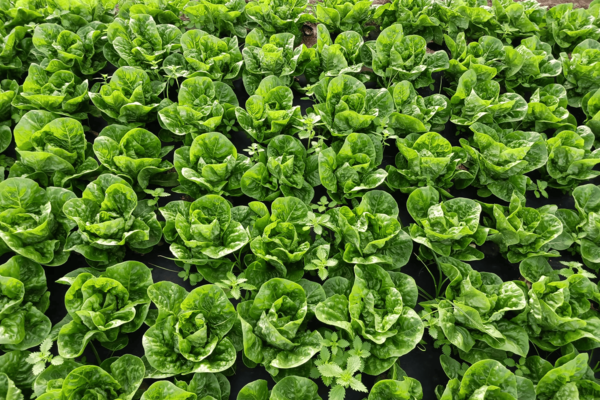
The field trials have been successfully conducted in lettuce crops from Ametller Origen in the town of Mataró (Barcelona) where the potential of brewing by-products—such as spent grain, the solid matter left over after the grain cooking process—has been demonstrated to improve soil fertility, reduce dependence on chemical fertilisers, and minimise the risk of nitrate contamination.
The results obtained have been very positive: the use of spent grain as fertiliser has increased the agronomic performance of crops, even surpassing the results obtained with conventional mineral fertilisation in both biomass and productivity per hectare. An improvement in crop quality has also been observed, as well as an increase in soil microbial biodiversity thanks to the activation of enzymes essential for its balance.
Furthermore, a natural biofumigant effect has been found, derived from the gases generated during the decomposition of spent grain, which helps control certain pathogens, reducing the need for plant protection products and contributing to a healthier agricultural environment. It is estimated that the use of spent grain as a biofertiliser and biofumigant allows farmers to cut fertilisation and pesticides costs by up to 80%.
The BEER-SOIL project exemplifies the collaboration between the industrial and agri-food sectors to move towards a circular economy model that turns waste into new resources. The initiative also fosters technological and scientific transfer between companies and research centres, offering scalable solutions that can be applied in Damm's various plants and replicated in other industries in the sector.
“With BEER-SOIL we are taking another step in our commitment to closing the beer production cycle and giving a second life to our waste, transforming it into a source of value for the countryside,” says Juan Antonio López Abadia, Head of Energy Optimisation and Environment at Damm. “The project demonstrates that innovation and collaboration between companies from different sectors are key to moving towards a more efficient, circular and environmentally friendly production model.”
Amaya Prat, head of sustainability at Ametller Origen, highlights that "initiatives like BEER-SOIL reflect our commitment to applied innovation and sustainability with real impact".
With BEER-SOIL, Damm and Ametller Origen consolidate their role as benchmarks in sustainability and innovation within the agri-food sector, fostering a new way of producing that combines scientific research, environmental commitment and shared responsibility with the region and its farmers.

